TEN CRUCIAL BENEFITS OF PPC ADVERTISING –
FOR UK BUSINESSES IN INVESTMENT AND FINANCE
TL;DR: 📈
- What PPC does for finance firms: it delivers instant, trackable traffic and conversions, putting your offer in front of investors and decision-makers the moment they search.
- Precision targeting is the core advantage: keywords, geo-targeting, and audience filters let you reach institutional investors, HNWIs, fund managers, and advisers with surgical accuracy.
- Speed and control set it apart: campaigns can be live within hours, run to a fixed daily budget with no surprise costs, and be optimised or paused in minutes.
- Everything is measurable: impressions, clicks, keyword performance, and ROAS give full visibility, so spend can be justified against compliance-driven KPIs.
- Retargeting closes the gap: most prospects will not convert on a first visit in high-trust financial sectors, so PPC keeps your brand in play across a long decision journey.
- The ten benefits together: audience reach, speed, content promotion, measurability, brand awareness, budget control, local or global reach, conversions, rapid optimisation, and retargeting.
The main benefits of PPC advertising for UK investment and finance firms are precise audience targeting, near-instant campaign launch, full measurability, tight budget control, and retargeting that recovers high-value prospects. Because you only pay when a prospective investor clicks, pay-per-click gives budget control, placement strategy, and targeting precision that make it ideal for investment firms, fintechs, and asset managers who need results they can measure, scale, and control. Below we break down the ten crucial benefits in full.
Share this article:
What Are The Ten Benefits Of PPC Advertising For Finance Firms?
The ten benefits are precise audience access, rapid campaign launch, traffic to existing content, complete measurability, stronger brand awareness, hard spending limits, local or global reach, direct conversions, rapid optimisation, and smart retargeting. Taken together they explain why pay-per-click is one of the most controllable and accountable channels available to investment and finance marketers.
With its precisely targeted audience reach, the benefits of pay-per-click advertising in finance are incredibly attractive. PPC is highly effective in terms of budget control, placement strategy, and targeting options, making it ideal for investment firms, fintechs, and asset managers. The sections below take each benefit in turn.
Why Should Investment And Finance Businesses Use PPC?
You should use PPC because it puts your offer in front of active financial decision-makers the moment they search, and you only pay when one of them clicks. For something that delivers such outstanding results, PPC advertising is a simple concept: your ads appear on strategically selected platforms, such as Google Search or premium financial websites, and payment is triggered only by a genuine click from a prospective investor.
There are multiple ways to utilise PPC, but Google Ads remains the most common and effective channel for financial marketing. From search and display ads to remarketing, PPC provides hyper-targeted access to your ideal financial audience. That combination of intent-based reach and pay-on-click economics is what makes it so well suited to regulated, high-value sectors where every enquiry counts.
How Does PPC Help Finance Firms Reach And Win The Right Audience?
It lets you place your message in front of the exact people already searching for your solution, then move them from a click to a conversion. The five benefits below cover targeting, speed, content promotion, conversions, and retargeting.
Does PPC Put Finance Firms In Front Of Exactly The Right Audience?
Yes, targeting precision is one of PPC's biggest strengths. Imagine placing your message directly in front of institutional investors, HNWIs, fund managers, or wealth advisers already searching for your solution. Whether you rely on keywords like "discretionary investment services" or geo-targeted searches in financial hubs like London or Edinburgh, you can adjust campaigns to achieve a surgical level of precision. Layering match types, negative keywords, and audience filters on top of that keeps spend focused on genuine prospects rather than casual browsers.
How Quickly Can A Financial PPC Campaign Go Live?
Your campaign can be live within hours, meaning your offer is in front of active financial decision-makers almost instantly. Whether you are offering a wealth investment solution or financial software, PPC lets you tailor campaigns to capture trends, respond to regulatory shifts, and adapt to market movements in real time. That responsiveness matters in finance, where sentiment and demand can turn on a single announcement, and a campaign built to react quickly can capture attention while the topic is still live.
Can PPC Drive Traffic To Your Existing Financial Content?
Yes, PPC turns thought leadership and financial whitepapers into working conversion tools. Already investing in this kind of content? Use PPC to funnel high-intent visitors to it. Your blog, case studies, or performance reports become conversion tools once PPC brings the right eyes to your site. Rather than hoping the right investor stumbles on a report through organic search, you can pay to place that asset directly in front of the audience most likely to act on it.
Do Conversions And PPC Go Hand In Hand?
They do, because PPC reaches people who are already in-market and ready to act. People searching for solutions like "capital risk software" or "alternative asset fund UK" are already in-market. Use PPC to present your value proposition front and centre. When combined with high-quality landing pages, your click-throughs can lead directly to meaningful financial conversions, whether that is a demo request, a brochure download, or a booked call with an adviser.

How Does PPC Use Retargeting In Financial Marketing?
Retargeting keeps your brand in front of prospects who did not convert first time, which is most of them in high-trust financial sectors. But PPC retargeting lets you stay top of mind. Whether they are evaluating competitor tools or revisiting your demo page, retargeting ensures that your brand stays in play throughout the decision journey. Because financial decisions often involve several stakeholders and a long evaluation period, staying visible across that whole cycle is frequently what separates the firm that wins the mandate from the one that is forgotten.
How Does PPC Give Finance Firms Control And Measurability?
It gives you complete data on performance, hard limits on spend, and the ability to change course in minutes. These three benefits are what make PPC so accountable to a finance-team audience.
Is PPC Completely Measurable And Trackable?
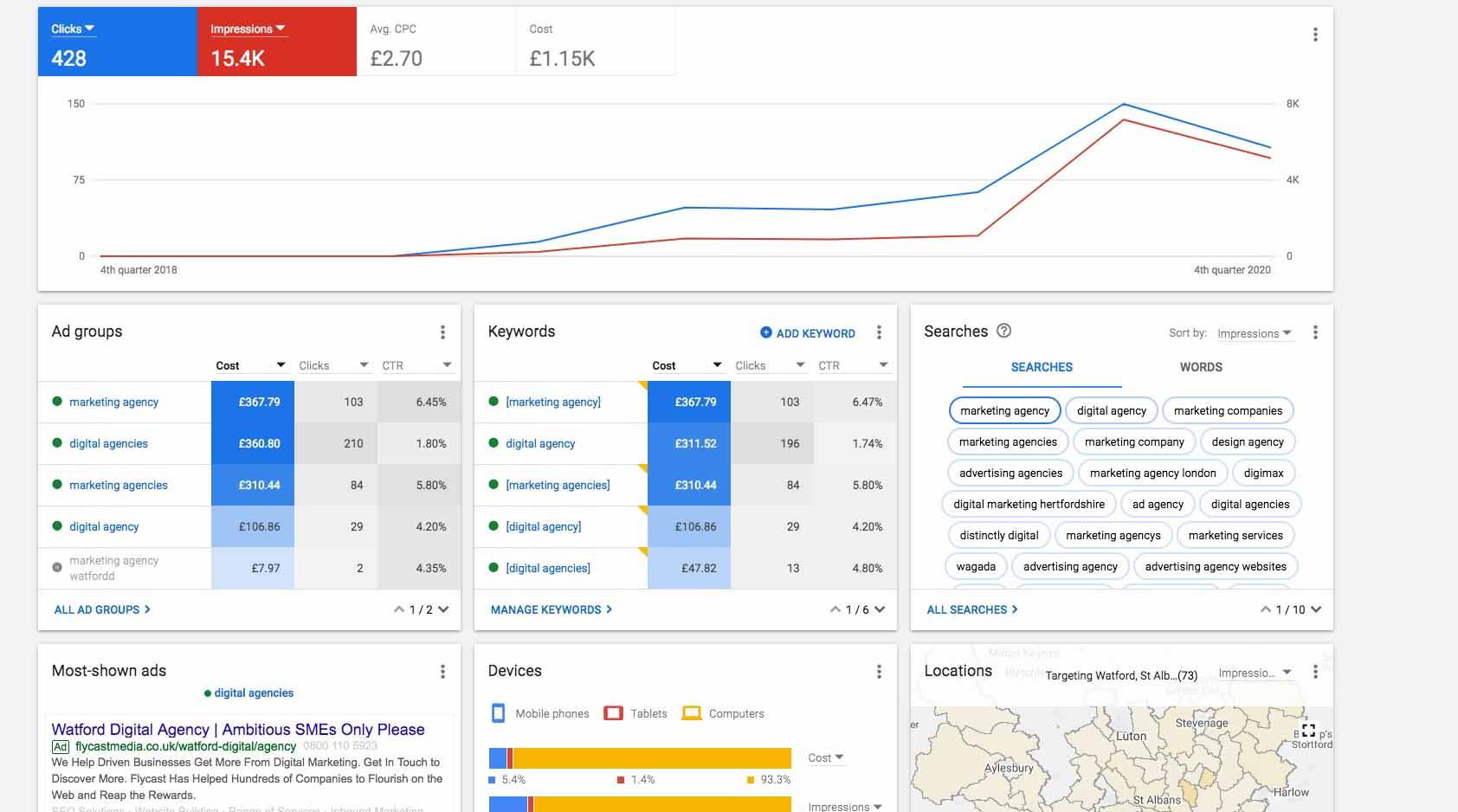
Yes, and full measurability is perhaps PPC's biggest win for financial marketers. From impressions and clicks to keyword performance and ROAS, PPC provides full visibility. Google Ads analytics allow you to justify spend, optimise performance, and align campaigns with compliance-driven KPIs. Every pound is attributable to an outcome, which makes it far easier to defend a marketing budget to a board that expects clear, reportable returns.
Can You Set A Spending Limit On PPC?
Yes, PPC gives you complete control over what you spend with no surprise costs. Whether you are marketing a new fund launch or managing ad spend across multiple campaigns, PPC gives you control. Set daily budgets, adjust based on key financial reporting cycles or investor roadshows, and scale as results come in, all with zero surprise costs. That predictability lets you align spend with the moments that matter most, then dial it back when the calendar is quiet.
How Fast Can PPC Campaigns Be Optimised?
Almost immediately, because everything can be adjusted on the fly. With PPC, you can test new ad copy, switch target sectors, or focus on short-term acquisition goals at a moment's notice. For fast-moving financial firms, this agility is priceless. Underperforming keywords can be paused, winning ads scaled up, and budgets shifted towards the sectors that are converting, all without waiting for a new campaign cycle to begin.
How Does PPC Build Brand And Reach Across Markets?
It keeps your name beside bigger competitors on premium search terms and lets you tune your reach from a single postcode to a global audience. These final two benefits cover visibility and geographic flexibility.
Does Pay-Per-Click Boost Brand Awareness?
Yes, PPC builds visibility and trust even before a click converts. Competing with bigger names in asset management or fintech? PPC lets you show up beside them. Even before clicks convert, brand visibility on premium search terms keeps your name in front of the right audience, improves recognition, and builds trust in crowded financial markets. Repeated exposure on the terms your best prospects search for is a quiet but powerful way to establish credibility against far larger competitors.
Can PPC Target Locally And Globally?
Yes, PPC adapts from regional hubs to global investor audiences with equal ease. From global investor audiences to regional financial services hubs, PPC adapts. Targeting Canary Wharf, Frankfurt, or global private equity firms? PPC lets you localise or globalise your message with ease. You can run tightly geo-fenced campaigns for a single financial district or open the same offer up to an international audience, adjusting language, landing pages, and bids to suit each market.
For financial services, PPC is more than a tactic, it is a strategic tool for firms that need results they can measure, scale, and control.
Frequently Asked Questions
What is PPC advertising for financial services?
PPC, or pay-per-click, is a form of digital advertising where your ads appear on platforms like Google Search or premium financial websites and you only pay when a prospective investor clicks. For finance firms it offers precise, intent-based access to the right audience with full budget control, making it well suited to investment firms, fintechs, and asset managers.
Why is PPC good for investment and finance firms specifically?
Because it combines surgical targeting with measurable, controllable spend in a sector where enquiries are high value and trust matters. You can reach institutional investors, HNWIs, fund managers, and advisers by keyword and location, track every click against compliance-driven KPIs, and retarget prospects across a long decision journey rather than losing them after a single visit.
How quickly can a PPC campaign start delivering results?
A campaign can be live within hours, putting your offer in front of active financial decision-makers almost immediately. Because you can capture trends, respond to regulatory shifts, and adapt to market movements in real time, PPC is one of the fastest channels for generating measurable traffic and enquiries.
How much control do I have over PPC spend?
Complete control, with no surprise costs. You set daily budgets, adjust them around reporting cycles or investor roadshows, and scale up as results come in. Every pound is attributable to an outcome through metrics like clicks, keyword performance, and ROAS, which makes spend easy to justify to a board.
What is PPC retargeting and why does it matter in finance?
Retargeting shows tailored ads to people who have already visited your site but did not convert. It matters in finance because most prospects will not act on a first visit in high-trust sectors, so retargeting keeps your brand in play while they evaluate competitors or revisit your demo page, supporting the long, multi-stakeholder decisions common in the industry.
Which PPC platform is best for financial marketing?
Google Ads remains the most common and effective channel for financial marketing, offering search, display, and remarketing options that give hyper-targeted access to your ideal audience. Many firms combine it with placements on premium financial websites, but Google Ads is usually the core of an investment or finance PPC strategy.
Shane McEvoy is a financial marketing expert with over 30 years' experience in digital advertising and financial services. He founded Flycast Media, a leading financial marketing agency, and has authored several influential guides and regularly contributes to respected industry publications - read his profile.